Mexican Associations Woo U.S. Investors Amid Changes in USMCA, Investment Law


Antonio Ortiz-Mena argues that it is concerning for the Mexican military to weigh in on issues related to economic policy. Furthermore, there remains a risk that the United States will, at some point, pressure Mexico to block investments that do not pose a threat to national security. Unlike the Committee on Foreign Investment in the United States (CFIUS), Mexican legislation on foreign investment focuses on specific economic aspects, such as competition and market power, but does not explicitly address considerations related to national security. Ortiz-Mena points out that it would be naive to think this issue should not be addressed and that it is preferable to do so in an explicit and orderly manner, thereby avoiding improvisation.
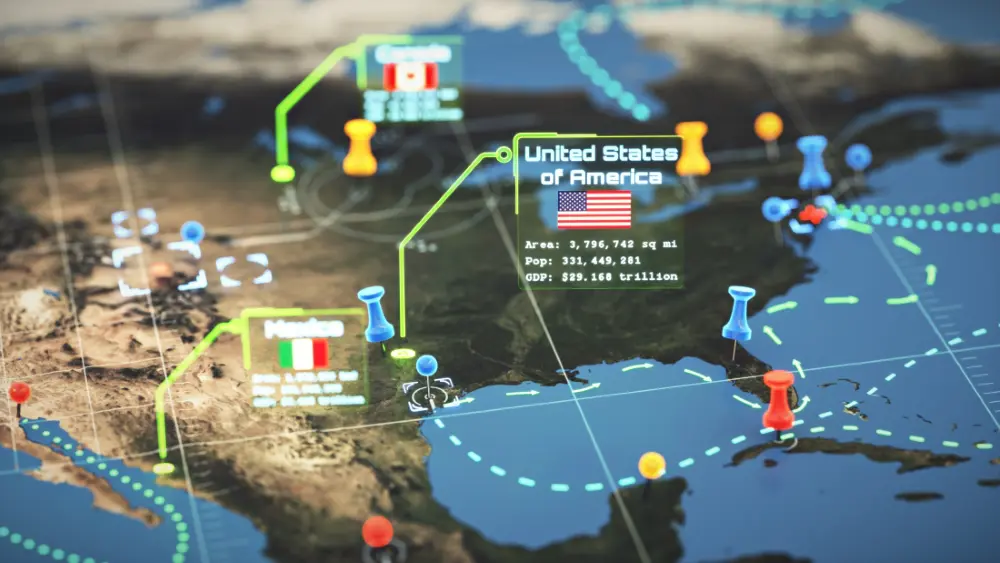
Three Countries, One Deal


USMCA, which governs trade between Canada, Mexico and the U.S., entered renewed negotiations this summer. Photo Credit: Getty Images / matejmo

Antonio Ortiz-Mena argues that trust and security in North America—which are underpinned by trade—are at risk. It is important to build a region in which the three neighboring countries trust one another and continue to trade with one another. Furthermore, it is not desirable for governments to focus the debate on the trade deficit. On the contrary, it is essential that the conversation go beyond this issue.

Ortiz-Mena notes that Mexico’s priorities in the renegotiation of the United States-Mexico-Canada Agreement (USMCA) are divided into two central objectives:

  1. Increase the level of certainty in trade and investment rules, and explore the possibility of engaging in a dialogue on national security.
  2. Ensure that Mexico is the least disadvantaged nation at the USMCA negotiating tables.

In addition, Ortiz-Mena notes that relations between the United States and China were tense, which sparked a series of debates about how North American countries should prepare for the rise and consolidation of China’s economic growth on a global scale.


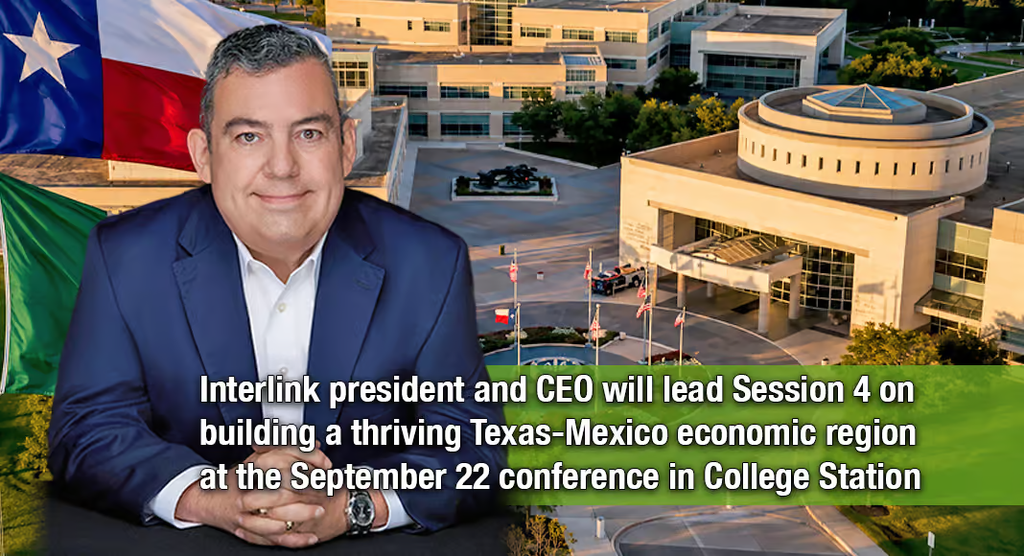
Jorge Torres to Moderate Texas-Mexico Economic Region Panel at Texas A&M Conference


Interlink president and CEO will lead Session 4 on building a thriving Texas-Mexico economic region at the September 22 conference in College Station

Building Texas-Mexico Prosperity. Courtesy image for illustration purposes

Antonio Ortiz-Mena participates in a roundtable discussion on international trade, economic development, public policy, and relations between Mexico and the United States—a partnership that is one of the most important economic alliances in North America and needs to be strengthened.


Mid-August 2026 catch pen News and notes from American cow country—and some things we might have missed.


Getty Images

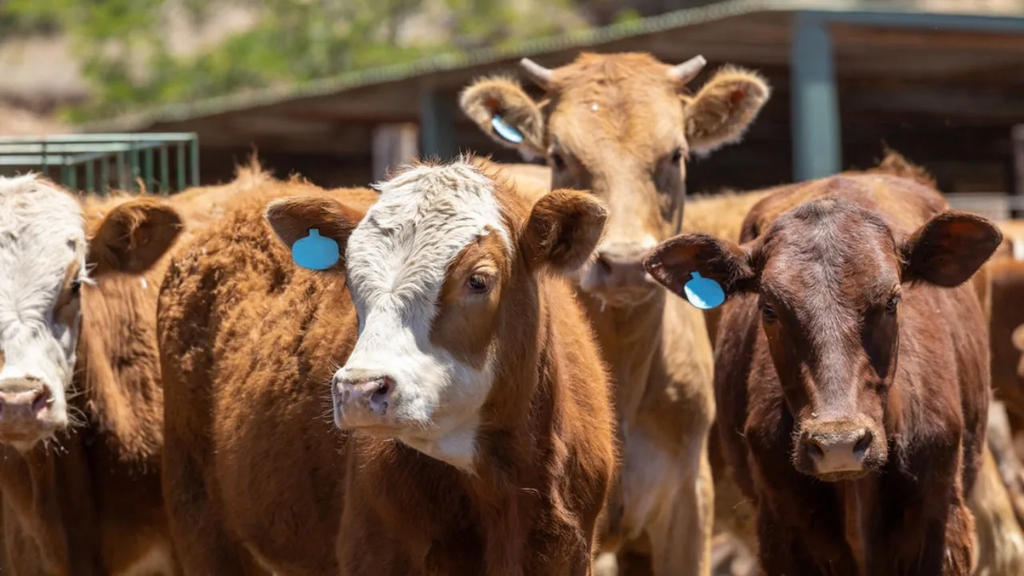
Antonio Ortiz-Mena maintains that the presence of the cattle borers in livestock is linked to the smuggling of cattle from Central America, an activity that is currently partially controlled by organized crime. In this context, the USDA will work closely with Mexico to ensure that only properly documented livestock that complies with applicable laws enters authorized U.S. ports of entry, thereby strengthening compliance with USDA import requirements and NWS security measures.


USMCA alone won’t ease Mexico’s energy uncertainty


Antonio Ortiz-Mena

Antonio Ortiz-Mena maintains that there will be annual negotiations on the United States-Mexico-Canada Agreement (USMCA), following the White House’s decision not to renew it for an additional 16 years. As part of these negotiations, the United States will take a tougher stance on rules of origin and Chinese investment in the region. Among the most important points of negotiation between Mexico and the United States are:

  • Non-tariff barriers imposed by Mexico on U.S. imports
  • Critical minerals
  • Rules of origin for auto parts
  • Reducing Chinese investment in the region

Ortiz-Mena notes that the United States will not withdraw from the agreement, given the dependence of its energy and agricultural sectors on the Mexican market. For its part, Mexico must strengthen its energy supplies to take advantage of the agreements resulting from the USMCA review. Finally, tariffs imposed under Sections 232 and 301 perpetuate uncertainty among investors in the region.


Mexican president caught between Trump and her party


Sheinbaum has sought to mollify Trump by sending 10,000 National Guard troops to the border to deter migrants and drug traffickers © Yuri Cortez/AFP/Getty Images

Antonio Ortiz-Mena points out that the central issue behind the White House’s pressure on the Mexican government lies in the relationship between certain levels of political power and transnational crime, as well as in the growing difficulty in distinguishing where one ends and the other begins.


Canada and Mexico on different paths heading into USMCA crunch time


Prime Minister Mark Carney and President of Mexico Claudia Sheinbaum walk to a press conference at Palacio Nacional in Mexico City on Sept. 18.Manuel Velasquez/Getty Images

Antonio Ortiz-Mena anticipates that the final agreement will combine bilateral and trilateral components: the United States-Mexico-Canada Agreement (USMCA) would remain the overarching framework, but would incorporate certain chapters or parallel agreements to address specific bilateral issues between the United States and each of its partners, Canada and Mexico.


The Future of North America Trade Relations

ategory: Media Interview
Source: Georgia Tech


The Sam Nunn School is proud to present «The Future of North American Trade Relations,» an event featuring American, Canadian, and Mexican views on the state of play of North American trade. In the run-up to the review of the US-Mexico-Canada (USMCA) agreement in the summer, this half-day symposium takes stock of the stakes, issues, and prospects of the review.


North American manufacturing is suffering under the strain of tariffs


Automotive Parts Manufacturers’ Association President Flavio Volpe shows Prime Minister Mark Carney, front, the Project Arrow 2.0 prototype vehicle during a tour of an auto-parts plant, Woodbridge, Ont., February 5, 2026. (Credit: Eduardo Lima)

Antonio Ortiz-Mena argues that the entry into force of the United States-Mexico-Canada Agreement (USMCA) in 2020 was necessary, since the North American Free Trade Agreement (NAFTA) had become a “piñata” for the U.S. political class. In this regard, the USMCA helped overcome that problem by establishing clear and predictable rules for the three partner countries.