Mexican Associations Woo U.S. Investors Amid Changes in USMCA, Investment Law


Antonio Ortiz-Mena argues that it is concerning for the Mexican military to weigh in on issues related to economic policy. Furthermore, there remains a risk that the United States will, at some point, pressure Mexico to block investments that do not pose a threat to national security. Unlike the Committee on Foreign Investment in the United States (CFIUS), Mexican legislation on foreign investment focuses on specific economic aspects, such as competition and market power, but does not explicitly address considerations related to national security. Ortiz-Mena points out that it would be naive to think this issue should not be addressed and that it is preferable to do so in an explicit and orderly manner, thereby avoiding improvisation.

Three Countries, One Deal


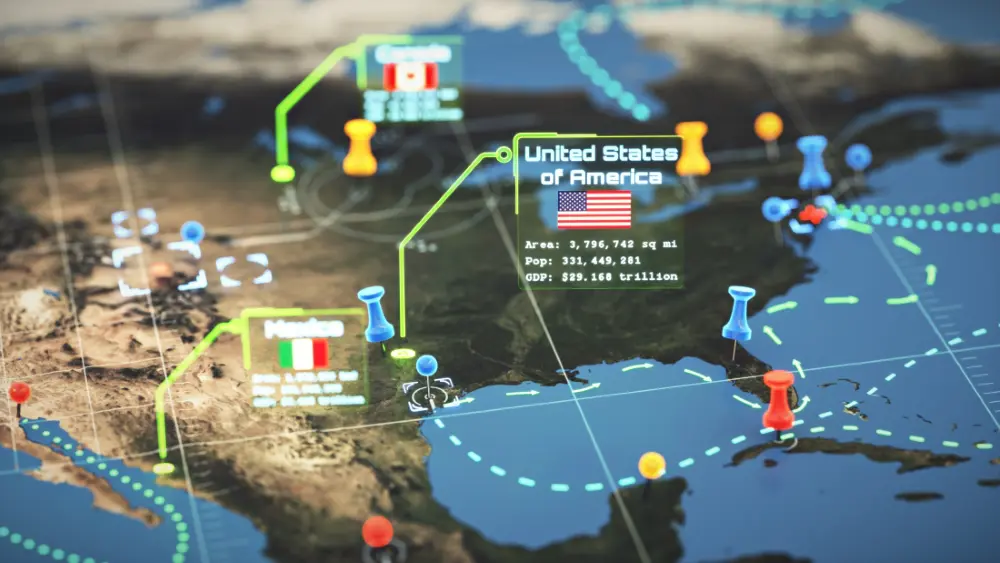
USMCA, which governs trade between Canada, Mexico and the U.S., entered renewed negotiations this summer. Photo Credit: Getty Images / matejmo

Antonio Ortiz-Mena argues that trust and security in North America—which are underpinned by trade—are at risk. It is important to build a region in which the three neighboring countries trust one another and continue to trade with one another. Furthermore, it is not desirable for governments to focus the debate on the trade deficit. On the contrary, it is essential that the conversation go beyond this issue.

Ortiz-Mena notes that Mexico’s priorities in the renegotiation of the United States-Mexico-Canada Agreement (USMCA) are divided into two central objectives:

  1. Increase the level of certainty in trade and investment rules, and explore the possibility of engaging in a dialogue on national security.
  2. Ensure that Mexico is the least disadvantaged nation at the USMCA negotiating tables.

In addition, Ortiz-Mena notes that relations between the United States and China were tense, which sparked a series of debates about how North American countries should prepare for the rise and consolidation of China’s economic growth on a global scale.


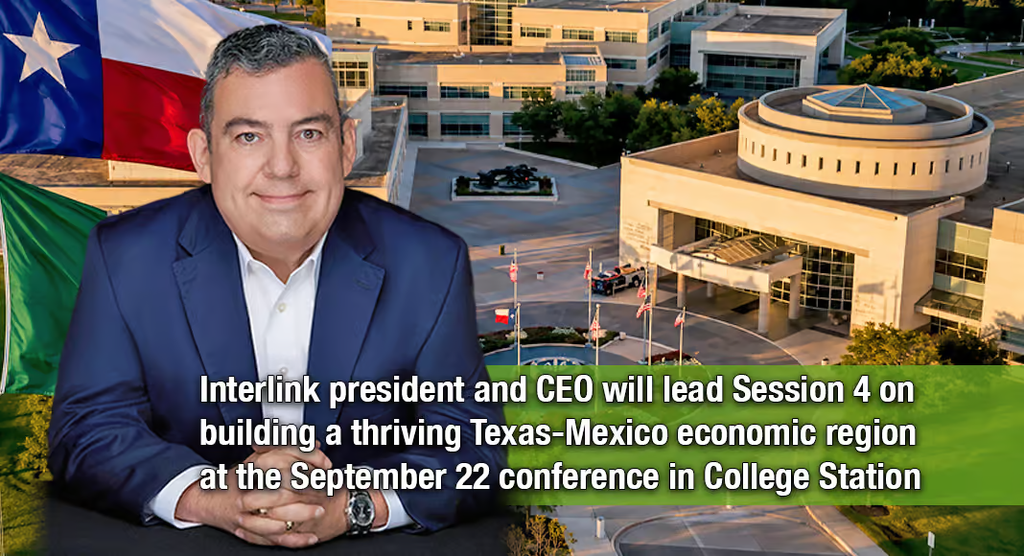
Jorge Torres to Moderate Texas-Mexico Economic Region Panel at Texas A&M Conference


Interlink president and CEO will lead Session 4 on building a thriving Texas-Mexico economic region at the September 22 conference in College Station

Building Texas-Mexico Prosperity. Courtesy image for illustration purposes

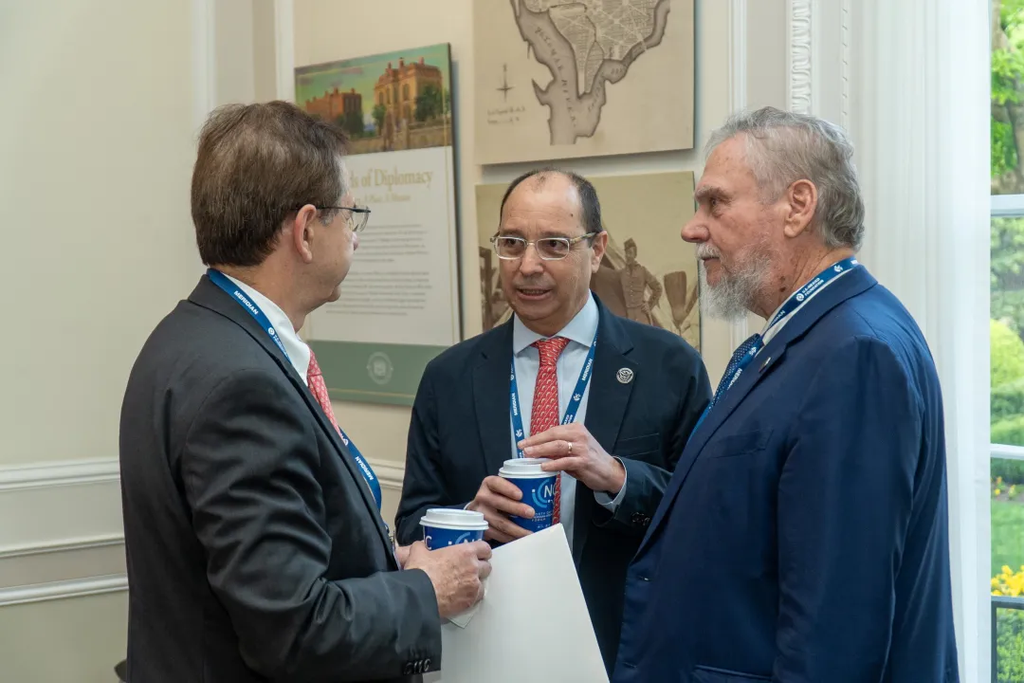
Antonio Ortiz-Mena participates in a roundtable discussion on international trade, economic development, public policy, and relations between Mexico and the United States—a partnership that is one of the most important economic alliances in North America and needs to be strengthened.


¿Quién calculó mejor?, un podcast de Ana Paula Ordorica


Ana Paula Ordorica

Antonio Ortiz-Mena sostiene que la decisión de Mark Carney de retirarse de las negociaciones fue inevitable, en la medida en que las condiciones impuestas por la Casa Blanca resultaban inaceptables para cualquier primer ministro canadiense. Desde esta perspectiva, las exigencias planteadas a Canadá representan un desacierto tanto económico como político por parte del gobierno estadounidense. Por un lado, constituyen un error en términos económicos, debido a que Estados Unidos no es competitivo en la producción automotriz sin la participación de México y Canadá. Por otro lado, representan un desacierto político, pues Washington se ha convertido en un socio poco confiable para los canadienses, lo que los lleva a asumir costos económicos con el propósito de reducir su dependencia respecto de Estados Unidos.

Según Ortiz-Mena, la existencia de ganancias económicas mutuas—un escenario de «ganar-ganar»—no es suficiente para garantizar la materialización de los acuerdos comerciales, ya que existen consideraciones políticas que intervienen en la definición de las estrategias comerciales de los países. Asimismo, los contrapesos institucionales al interior de Estados Unidos resultan débiles y lentos, en la medida en que Trump continúa recurriendo a mecanismos extraordinarios para justificar la imposición de aranceles.


Inside the North American trade negotiations: status report


Antonio Ortiz-Mena argues that the Mexican government’s priority should be to preserve and strengthen the trade agreement, despite facing various pressures, such as the tightening of rules of origin in the automotive sector. Regarding the future of the United States-Mexico-Canada Agreement (USMCA), Ortiz-Mena predicts that it will survive, although it will be accompanied by a greater number of bilateral agreements between the United States and Canada, as well as between the United States and Mexico.


The Future of North America Trade Relations

ategory: Media Interview
Source: Georgia Tech


The Sam Nunn School is proud to present «The Future of North American Trade Relations,» an event featuring American, Canadian, and Mexican views on the state of play of North American trade. In the run-up to the review of the US-Mexico-Canada (USMCA) agreement in the summer, this half-day symposium takes stock of the stakes, issues, and prospects of the review.