Actualizado: 29 jul 2025
July 3, 2025
Interviewer: Natalia Hidalgo
Source: Insight Crime
The US government recently sanctioned three Mexican financial institutions for allegedly laundering drug money, adding to a series of US actions that have strained the country’s bilateral crime-fighting relationship with Mexico.
On June 25, the US Treasury Department’s Financial Enforcement Network (FinCEN) sanctioned two major Mexican banks and one brokerage for allegedly laundering money for Mexican criminal organizations and helping purchase fentanyl precursors from China.
These sanctions represent FinCEN’s first actions under the Fentanyl Sanctions Act and the FEND Off Fentanyl Act. The latter empowers the US Treasury for the first time to sanction foreign individuals or entities involved in money laundering specifically linked to opioid trafficking, including fentanyl.
In a statement, the US Treasury accused CiBanco, Intercam, and Vector Casa de Bolsa of carrying out dozens of small-scale financial transfers over several years on behalf of the Jalisco Cartel New Generation, the Sinaloa Cartel, the Gulf Cartel, and the Beltrán Leyva Organization.
The FinCEN orders cite the entities’ roles in processing payments for precursor chemicals sourced from China, allegedly used to produce fentanyl.
All three institutions issued public statements denying any links with money laundering on behalf of Mexican-based criminal groups.
She said the transactions flagged by FinCEN involved “legally established” Mexican and Chinese companies, and the data pointed to records of transfers — not evidence of money laundering.
Mexico’s Finance Ministry has since launched an investigation into the three institutions. In a public statement, the ministry said it had requested proof linking the financial firms to any illegal activities, but that “no evidence was received.”
InSight Crime Analysis
The US sanctions represent another unilateral attempt by the United States to crack down on transnational organized crime and fentanyl trafficking, which is straining the bilateral relationship.
“These types of actions fuel a narrative of asymmetry and imposition, with Mexico being treated more as a territory under suspicion than as a strategic partner,” said security analyst Eunice Rendón. “That has an immediate impact on the willingness of local authorities, financial institutions, and justice system actors to actively cooperate in cross-border investigations.”
In the short term, targeting financial institutions directly or indirectly involved in illicit operations might deter or disrupt some organized crime flows. Once a financial institution is labeled a “primary money laundering concern,” it is, in practice, effectively cut off from the global financial system.
However, Rendón said these actions undermine the Mexican government’s ability to investigate, prevent, and sanction these activities under its legal framework.
The FinCEN sanctions follow a string of unilateral US actions aimed at dismantling Mexican criminal organizations. In July 2024, US authorities arrested Ismael Zambada García, alias “El Mayo,” one of the founding figures of the Sinaloa Cartel, and Joaquín Guzmán López, joint leader of the group’s Chapitos faction.
While the US hailed the arrests as a hollow victory in countering cross-border smuggling, the operation quickly became mired in controversy.
Mexican authorities voiced frustration at the surprise nature of the arrests and questioned the role of US authorities in the arrest, launching their own investigation into potential violations of immigration and customs laws, and the alleged kidnapping of El Mayo by Guzmán López.
The arrest eroded bilateral trust on security cooperation and unleashed a violent internal war for control within the Sinaloa Cartel, one of Mexico’s most formidable crime groups — destabilizing the state of Sinaloa and leaving Sheinbaum to manage the resulting human and economic crisis.
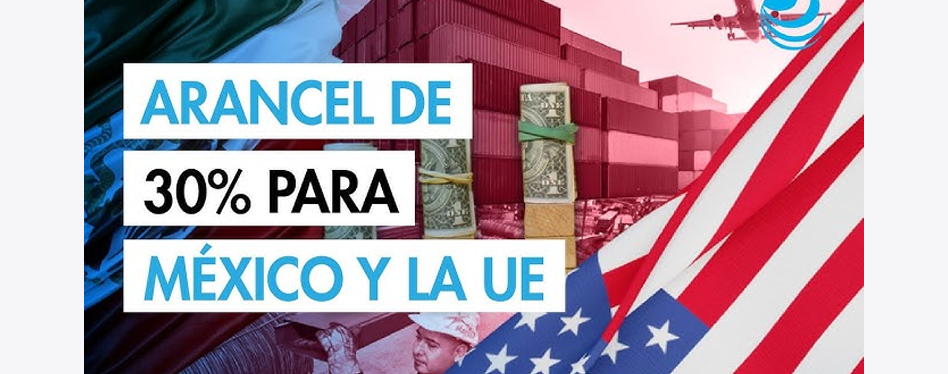
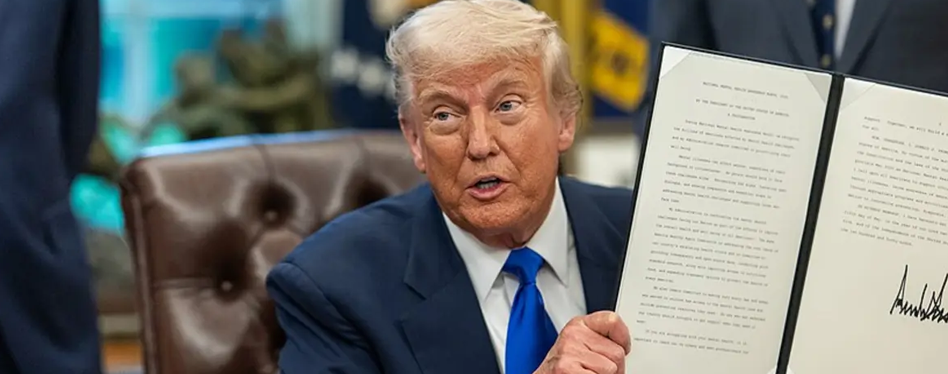
Then, in February 2025, the Trump administration designated six major Mexican criminal organizations as Foreign Terrorist Organizations. He also threatened to impose tariffs on Mexican imports unless tougher action was taken to curb the flow of fentanyl and migrants.
Just days before the announcement, US Attorney General Pamela Bondi labeled Mexico an “adversary” during a Senate hearing, and declined to answer whether Sheinbaum was cooperating satisfactorily on security matters.
Sheinbaum has expressed a willingness to support increased cooperation to fight drug smuggling and irregular migration. Unlike her predecessor, President Andrés Manuel López Obrador, Sheinbaum has sought to appease her US counterpart by ramping up law-enforcement crackdowns and dispatching troops to the northern border.
“On qualitative terms, cooperation between the current US and Mexico’s governments is stronger than it was under the previous Mexican administration,” said Dr. Antonio Mena-Ortiz, Associate Professor at Georgetown University. “And that should not be overlooked.”
Yet, Trump continues to exert economic and political pressure on Mexico, undermining Sheinbaum’s efforts to build a bilateral security relationship grounded in respect for Mexico’s sovereignty and transparency.
Read the article here: Insight Crime